Community, Real
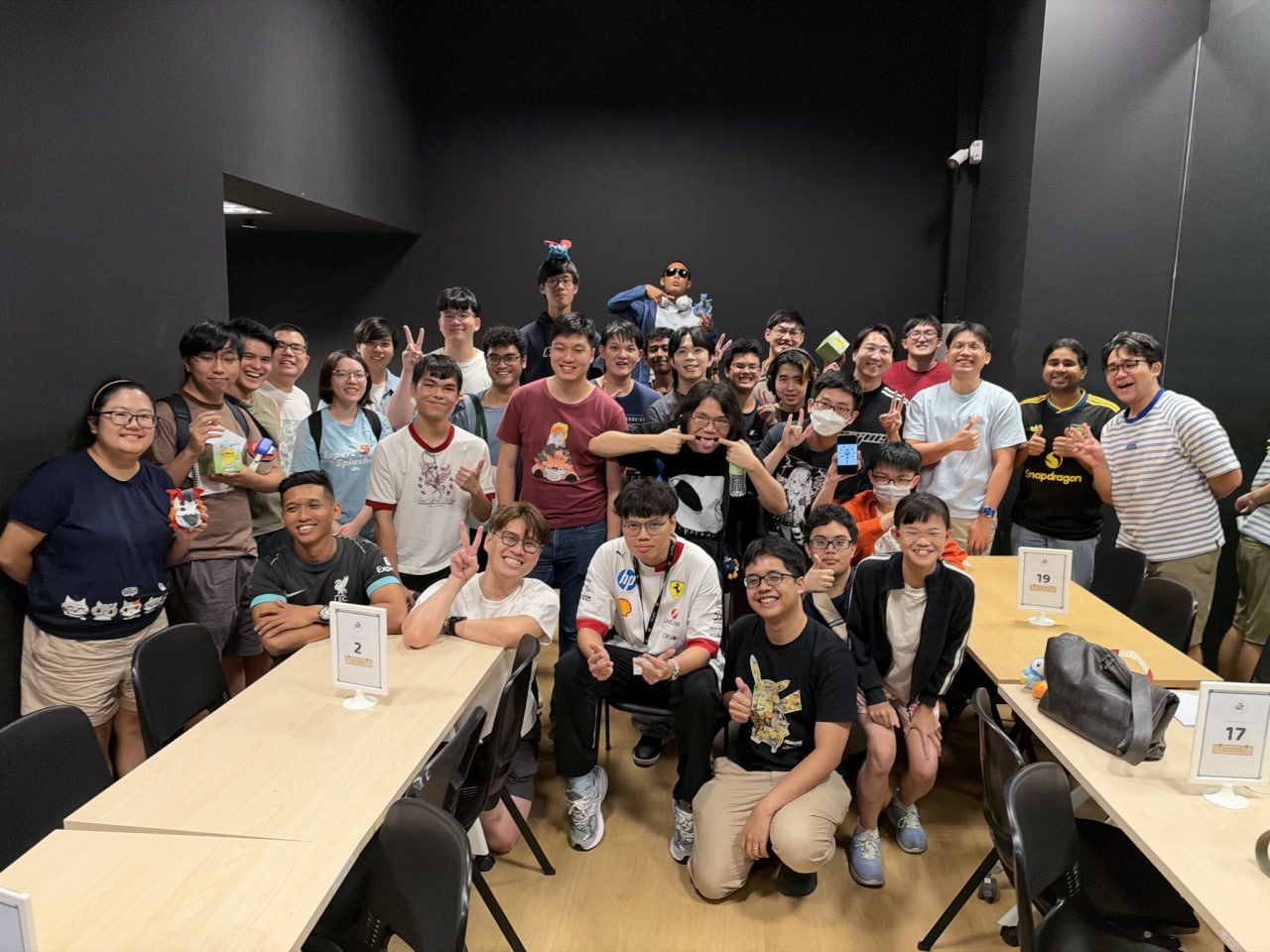
Some time ago, a card shop owner told me TTS felt like a real “community.” There were no WTB/WTS posts. No one asked whether their vintage cards could fund their next sealed case. I didn’t know what to make of that. *Scape calls me a community leader, and y’all call me lao ban (boss) for some reason, but I just do this for the hell of it. TTS started in the covid years. I was a bored university student, and a few of us wanted to play VGC while stuck at home. That’s all.
Back then, there was no real place for competitive battling. That’s still true today, with only two major events a year (cough). So people find this community of nerds, and some stay. Meanwhile, the Pokémon TCG boom has turned the hobby into a side hustle, and for some, a full-time job. That breeds transactional relationships. It’s easy to find like-minded people and use them for your own agenda. That wears down real friendships and organic social life, which I find lacking in Singapore.
Over the years, many people have asked me how to build a community like this. Some of them are the type who make a Google Doc in school, buy a Chagee, and disappear. They miss the point: a community needs a human touch. I’ll try not to sound like a sociology paper, but a community has to be a third space that forms naturally. It’s where people come to chill, hang out, cry, or mistake us for the official TPC page. Now hobbies are treated like money-making machines, and that sense of belonging is fading.
Where It Started And How Is It Now 
Back in the Jurassic ages of 2010, some of the old birds told me that they discovered Pokémon Video Game Elite4 Challenge by Team Robo (our predecessor) through carrier pigeons and brochures they found at department stores. You can read more about Team Robo here. People trusted the process and just turned up at a competitive event that had not much information online. From what I heard, City Square Singapore was packed for all four floors where the challenge was held and everyone enjoyed themselves. This is probably the birthplace of all things competitive Pokémon. I did not discover this hobby organically and my first event was in 2014 at the Elite Four Challenge at ITE College Central where I was spamming #SwaggerIsGod and somehow got to the top cut.
The scene today looks very different. I get random messages from people who have not touched VGC or a mainline game in their lives asking me “hOW dO i QuaLiFy foR thE woRld ChAMpiOnsHips???” Others pitch collaborations on events that I would call suspicious at best. Their main goal is glory, recognition, or a quick buck from using us to grow their business.
Why Communities Fizzle Out 
Most communities fizzle out for a simple reason: Someone makes a server, and people join because they think they can get rich. After that, nothing happens. There are no events, no routines, not even a daily good morning message. The founder keeps posting alone for a while and then gives up eventually and eventually the hot singles in your area invade the groups because no one maintains them.
What I am driving at is that they are missing a third space. You are probably sick and tired of hearing about the death of third spaces, but the idea is simple. Third spaces are places that are not home and not work. It is where people go to hang out with no agenda. The idea comes from sociologist Ray Oldenburg, but you already know the standard examples: the neighbourhood kopitiam, the card shop after hours. No one needs to be there, but regulars just show up anyway. They talk, joke, make friends and stay longer than originally intended.
A discord server does not give you that. Aside from the obvious lack of physical interaction, many founders just open one up and think nature will take its course and people will start interacting with each other. If that worked, the government would not have needed to start their own dating app, but I digress. A third space needs the same people showing up repeatedly and that takes time and effort. At TTS, that means hosting good events within the constraints of the entry fees we charge so that people have a reason to turn up. *Scape might not have a venue for us every month. We’re hungry ghosts, always looking for somewhere to haunt.
Even when people do show up, groups can die from the opposite problem: everyone is just too try hard in the group. In a hobby like VGC, it is easy to treat every person who talks to you as your competition. People hide their teams, keep their techs to themselves or only talk to people that can help them win. New players feel judged, so they stop coming. The strong players leave too because the lack of trust creates a toxic environment. This space only works when people can lose, laugh about it, maybe cry about it online and then attend the next event.
What We Do Differently 
I just have a simple rule for myself: give people a reason to turn up, whether on discord or at our tournaments. As far as I know, we are the only ones hosting regular in person tournaments. A community does not run for free, our events run mostly on entry fees and anonymous donations. Part of that goes to local artists, who drew our posters and made the artwork for playmats for players to take home. Pairings and standings live on our own site, play.tts.vg, so nobody has to crowd over an A4 sheet.
Emil is a good example of who a community attracts. He volunteered to host the entire system and helped me set up the first version of the site. He was a like-minded person who wanted the scene to work, not someone trying to use it. Though you can argue I am free R&D for his company’s future products.
We also say no. Plenty of people and companies approach us to monetise the community. I can usually tell within one conversation whether they want to build something or just ride the hype. Many of them never follow up anyway, lmao. Card shops are different. Those relationships grew naturally, because I support the shops when I can. I also make a point of not supporting places that outright scalp us Pokémon fans. And we have *Scape, who give us venue support, a place to build this community, and a safe space for youths to join us.
So, what is a community? 
I’m going to cop out and say I don’t have a neat definition. But I know what it isn’t. It isn’t a Discord link thrown around in group chats. It isn’t a logo, which in 2026 is usually AI-generated with zero effort. It’s a place people keep coming back to, even after going 0-5 at the last tournament, because the people matter. That is what the card shop owner noticed. None of this is rocket science. It’s just putting in the effort and caring more about people than stats and glory.